Gucci: Brand System Framework
A strategic reading of Gucci's brand system under transition, developed in parallel with published research on the Kering Group crisis and the appointment of Demna Gvasalia as Creative Director. This study examines the structural implications of creative discontinuity on positioning hierarchy and long-term brand authority.
Context
Gucci operates as an Italian cultural system where craft, sensuality, and coded heritage coexist through recognisable house signifiers (Horsebit, bamboo, Flora, GG).
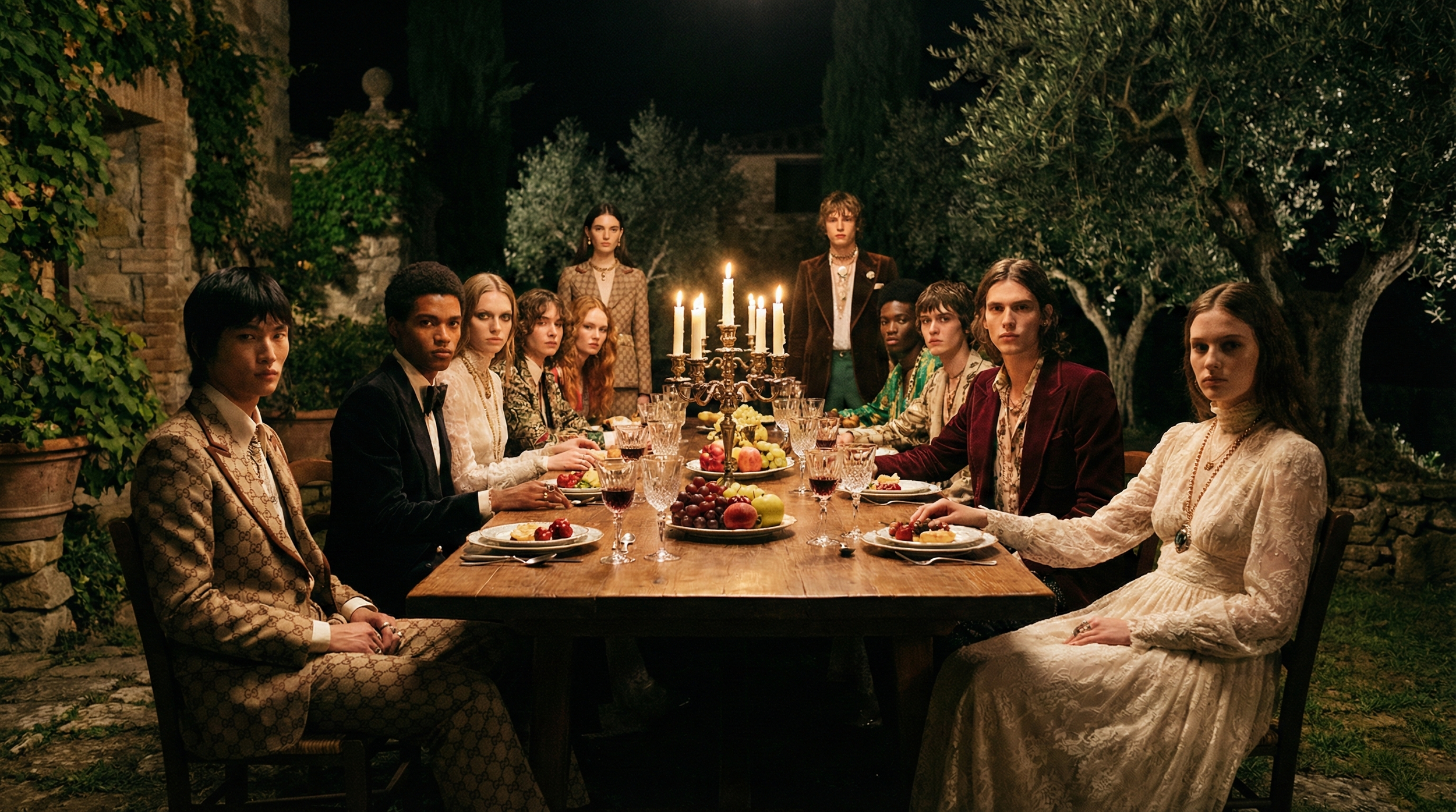
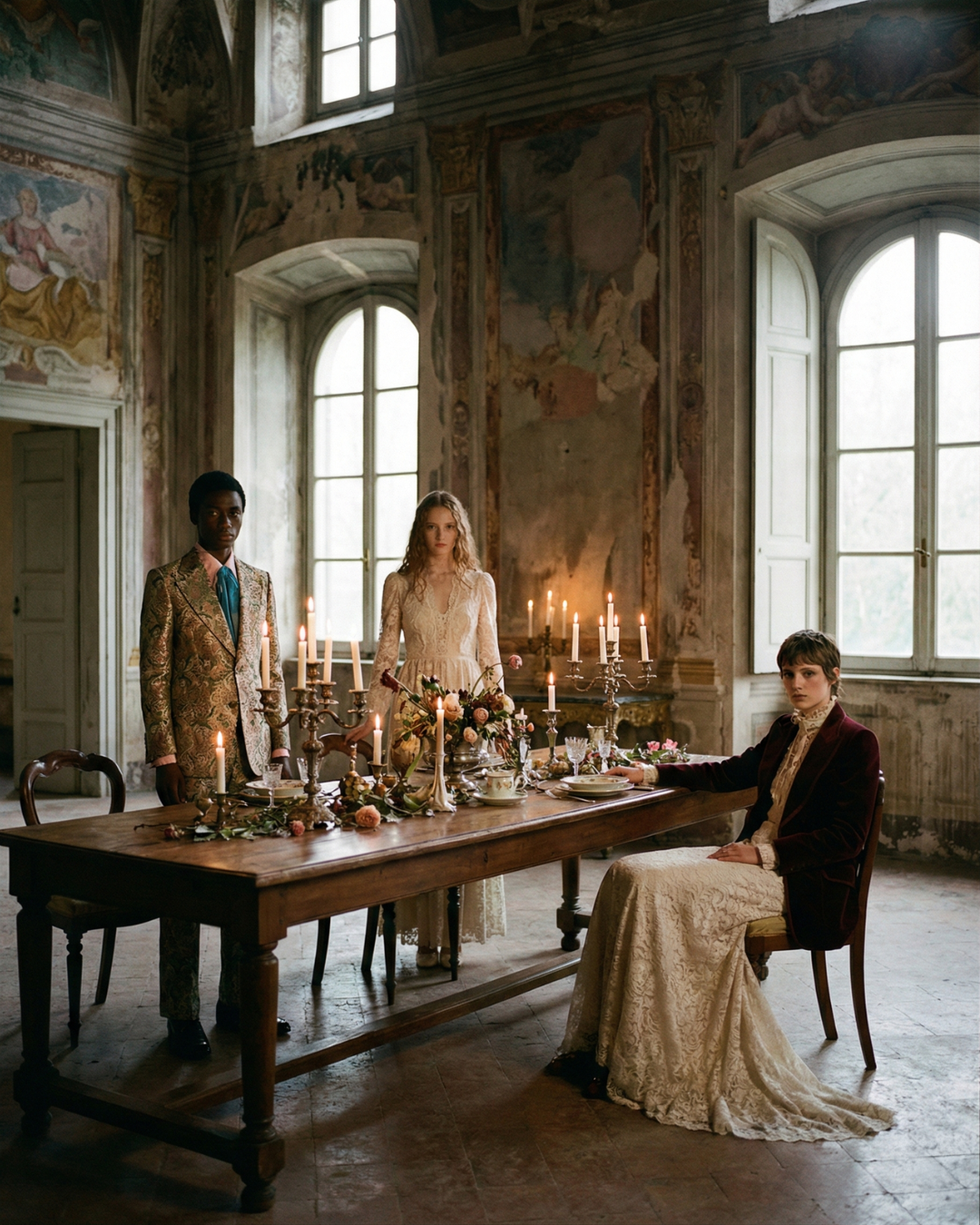
In Eredità Proibita, the conceptual collection reframes Italian inheritance through a controlled tension: Milanese tailoring discipline set against Florentine romantic fluidity, with decadence treated as material proof and
authorship rather than nostalgia.
System Logic
Meaning is generated by disciplined collisions: structure vs. drift, restraint vs. ornament, light vs. shadow.
Materials lead (velvet, nappa, lace, heavy wool, aged metal), with chiaroscuro used to reveal craft selectively. Archive codes function as operating components, allowing variation through proportion, placement, and hardware scale while keeping stable anchors: Rosso Ancora, deep forest green, aged gold, and GG ebony-brown.
Why This Matters
This system reasserts Gucci’s authority as a singular Italian visual author by grounding every image in object, material, and function — avoiding trend reliance or costume heritage.
It sustains long-term coherence because it is repeatable: the same tensions and codes can evolve season after season without losing recognisability or craft legitimacy.
Business Implication
By transforming archive codes into operating components rather than aesthetic references, the system protects pricing integrity, reinforces house authorship and sustains cross-season desirability without reliance on trend volatility.
Applied Base Plates


Published Sample Pack








Operational Conclusion
Eredità Proibita operates as a proof system: product leads while setting legitimises.
Chiaroscuro reveals material and hardware, structuring the sequence rather than styling the image.
The system enables controlled deployment across hero assets, 4:5 social formats, proof carousels and PDP galleries, ensuring consistency of material hierarchy and narrative tension across global touchpoints.