Loewe: Material Intelligence
An analysis of how Loewe uses material provenance and craft intelligence as structural brand codes, translating tactile specificity into a positioning system that operates independently of trend cycles.
Context
Loewe operates at the intersection of craft, experimentation and material sensitivity.
Rather than treating materials as a surface or symbol, the brand approaches them as active agents that inform form, process and expression over time.
This project examines how material behaviour can function as a structuring principle within a brand system, guiding creative direction without relying on fixed stylistic formulas.
System Logic
The system operates through observation, calibration and refinement rather than rigid control.
Material behaviour, process and variation are treated as inputs that inform direction, rather than elements to be corrected or neutralised.
Material as Intelligence
Materials are treated as active contributors rather than passive surfaces.
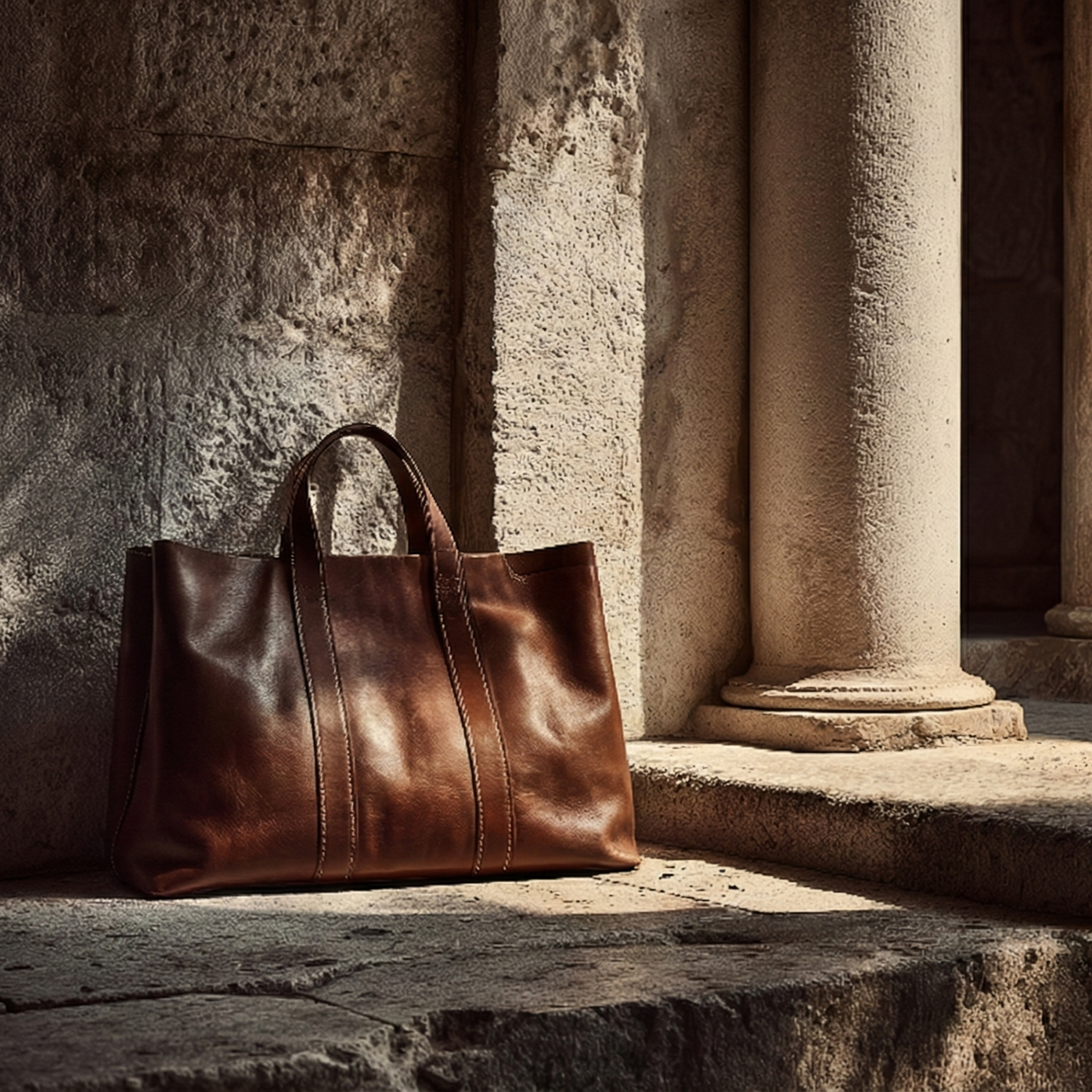
Texture, resistance, ageing and imperfection are observed and incorporated as part of the visual language, allowing form to emerge through interaction rather than prescription.
Material decisions become a source of knowledge, shaping both aesthetic outcomes and system behaviour over time.
Craft as Exploration
Craft is approached as an exploratory process rather than a fixed tradition.
Techniques are tested, reconfigured and refined, privileging learning and iteration over replication.
This positions craft as an evolving research practice that supports long-term brand relevance.
Form as Consequence
Form is not predefined, but emerges as the result of material behaviour and process.
Irregularities, tension and variation are integrated rather than corrected, contributing to a visual language that remains coherent while avoiding rigidity.
Uncertainty is treated as a condition to be managed within the system, not as a loss of control.


Why This Matters
This project demonstrates how material-led systems can support brand expression without relying on trends or decorative narratives.
By treating material as an active component of the system, brands can maintain rigor while allowing evolution over time.
The approach offers a framework for sustaining relevance through attention, craft and long-term decision-making.